April 10: Walking to the Rijksmuseum this morning brought its own pleasures, like eating pistachio-encrusted Italian cookies for breakfast and successfully dodging bicycles at road and canal intersections. (My friend Kathy and I are learning to swivel our heads constantly before stepping off a sidewalk.) In the evening, we dined on Indonesian food and stumbled upon a very tame offshoot of Amsterdam’s famous Red Light District. In between?
In the Hall of Honor at the Rijksmuseum, I savored the Rembrandts and Vermeers but found myself particularly engaged by the active and very public restoration underway on The Night Watch. Behind an enormous wall of glass, two conservators equipped with computers and cotton balls are meticulously stripping off discolored varnish from Rembrandt’s enormous masterpiece. A museum educator explained the process to us. We learned that varnish enriches the natural color of the paint; stripped of varnish, the color in this painting essentially disappears. (Look at the far left side of the painting just above a conservator’s white shoe: that tall light fuzzy patch is The Night Watch without varnish.) New varnish will eventually be reapplied and the color, we are assured, will be better than ever.
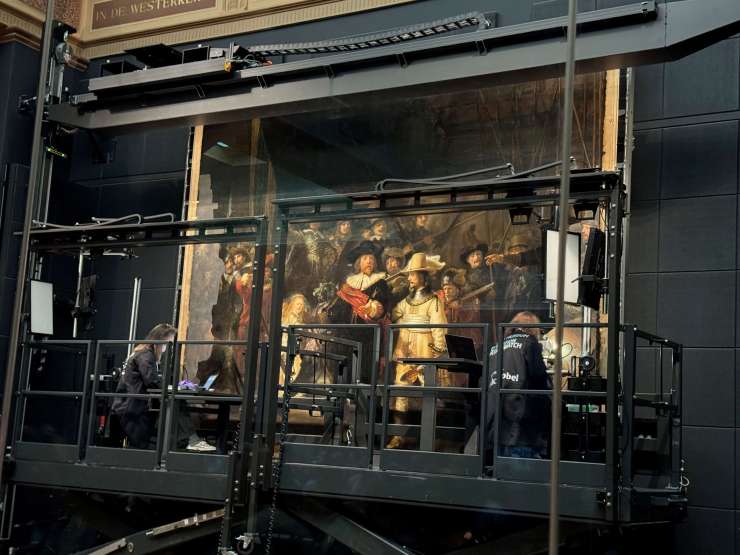
The museum educator also took special care to credit not only the conservators but also the art historians, computer experts, scaffolding engineers and glass-wall-builders, among many others, who are collaborating on this project. I love the opportunity to peek behind the figurative curtain; this visible restoration project is a perfect example. I also raise a glass to the many unseen hands essential to this particular project and to all the undertakings that enrich my life.

April 11: What are the odds that my friend Kathy and I would both harbor an enthusiasm for maritime museums? And what are the odds that we would bump into artwork at the maritime museum that augmented historical artifacts displayed at the Rijksmuseum? Welcome to the cross-disciplinary world of 17th century whaling.
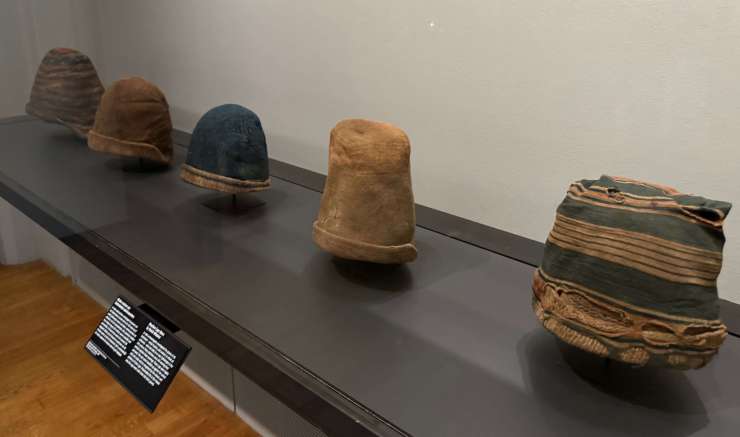
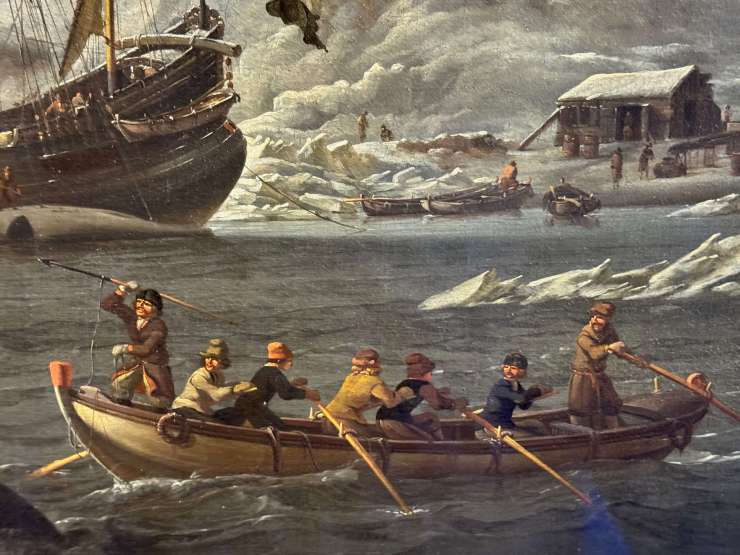
We learned yesterday that Dutch whale hunters in the 17th century customarily wore woolen caps in distinct colors and patterns to help crew members tell each other apart when bundled against the severe cold. The Rijksmuseum displayed six of these caps. Meanwhile, today, in an ecologically sensitive whaling exhibit, the Amsterdam maritime museum, Het Scheepvaartmuseum, obligingly offered a huge 17th century painting featuring seven whalers and their woolen caps. This is a detail I would never have noticed but for the surprising Rijksmuseum display.
And it’s a detail I’ll never forget because of the story behind the Rijksmuseum case. In 1980, archaeologists discovered the caps while examining the graves of 17th century Dutch whalers; they found these caps and others like them still warming the whalers’ skulls. Then, whoosh: In the interests of science and history, six of the caps landed at the Rijksmuseum.
I’m both grateful and a little sad that the whalers’ skeletons may have been reinterred without their caps. Perhaps a few 20th century Dutch volunteers busied their knitting needles first.
Bonus: Twenty thousand steps later (Amsterdam is a compact, highly walkable city, but really!), Kathy and I settled onto stools at Restaurant Sinck with a bottle of rosé and an intimate view of the restaurant’s appetizer and dessert chef. We watched her shave slivers of sea bass (which we ate) and assemble a chocolate-and-whiskey torte (which we also ate). And we talked with her at length.
This was the first time I’ve ever dined at a chef’s table; for 2½ hours Kathy and I enjoyed exceptional food, winning service — and an experience that inspired me to try to relax a little more in my own kitchen. (But of course I always enjoy watching someone else cook!)
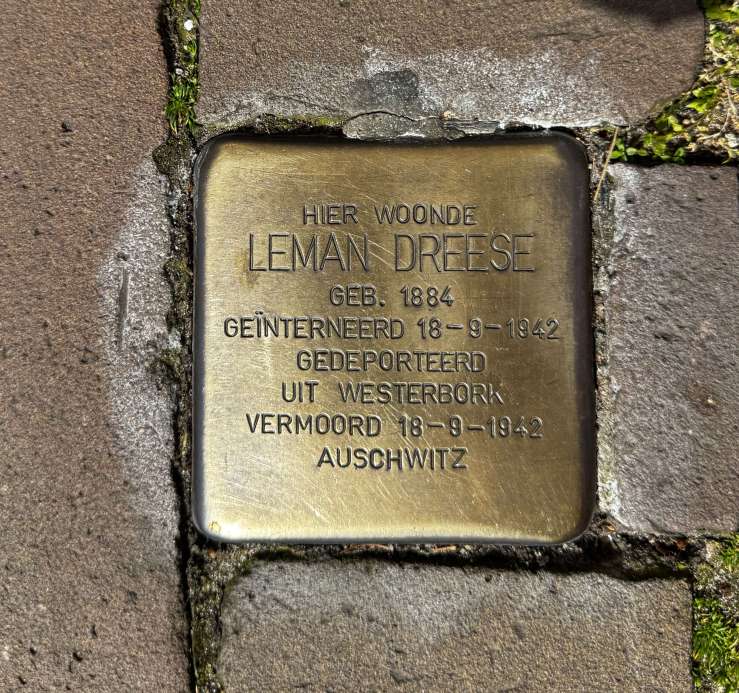
April 12: This morning Kathy and I visited the Anne Frank House. We had already paid our respects at dozens of Stumbling Stones studding Amsterdam’s sidewalks. Now we visited the Secret Annex where Anne, her sister Margot, her parents and four others hid from the Nazis for two years. We saw clippings of movie stars still clinging to the walls; we saw the windowless rooms and the Delft toilet bowl; we saw the pivoting bookcase behind which they hid; we saw the sun-bright garret and the hopeful tree growing past it; and we saw Anne’s diary.
Kathy and I both go to church on Sundays. With psalms of lamentation in my heart, I feel I had visited a different kind of sacred place today.
April 12: I noticed — and think it’s significant — that the curators of the Anne Frank House refused to comfort departing visitors with Anne’s famously inspiring affirmations. Nevertheless, I offer them to you here to honor Anne, who wrote that she wanted not to live in vain but instead to be useful, to bring enjoyment, and “to go on living even after my death.” Anne wrote:
- What is done cannot be undone, but one can prevent it happening again.
- How wonderful it is that nobody need wait a single moment before starting to improve the world.
- I don’t think of all the misery but of the beauty that still remains.
- In the long run, the sharpest weapon of all is a kind and gentle spirit.
- Whoever is happy will make others happy too.
And finally….
- It’s really a wonder that I haven’t dropped all my ideals, because they seem so absurd and impossible to carry out. Yet I keep them, because in spite of everything, I still believe that people are really good at heart.
I added the emphasis in the last quote. To see a photo of smiling Anne and hear a vast selection of her quotations, click here. Better yet, read her book again. I know I will.
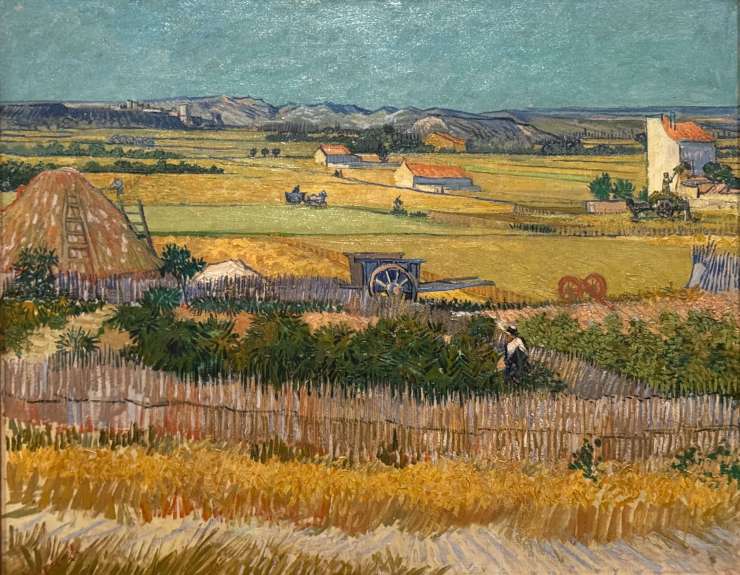
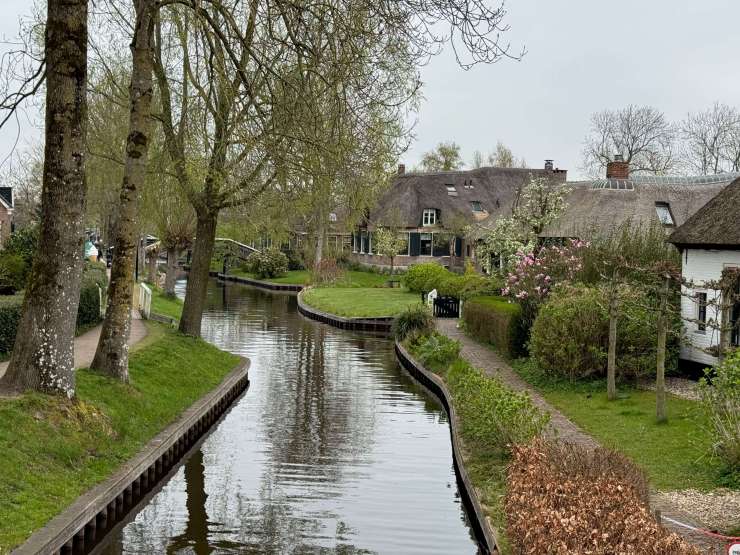
April 13: Kathy and I boarded our river cruise ship in Amsterdam yesterday. We have already enjoyed our sitting area, private balcony and (in my case) too much food. Today we traveled to the small car-free village of Giethoorn, known as the “Dutch Venice.” Although sunshine eluded us, we were greeted by a network of slender canals, delicate bridges and meticulous miniature gardens hugging thatched-roof cottages. Ostensibly with the goal of acquiring coinage, I bought — for a mere € 0.5 — a warm flaky fragrant croissant. Naturally, I pocketed the coins and ate the croissant.
April 14: A dispatch from the ship: Outside our stateroom window this morning is the wide North Brabant river, along with a tree-fringed shoreline and, at stately intervals, wind turbines blooming like tulips. Another river cruise ship glides into view, its two sleeping floors lined with private balconies. A dozen individuals speckle a dozen balconies. As we pass, I am able to see each person, but they cannot see each other. I like the idea that my gaze was the glue that momentarily united them.
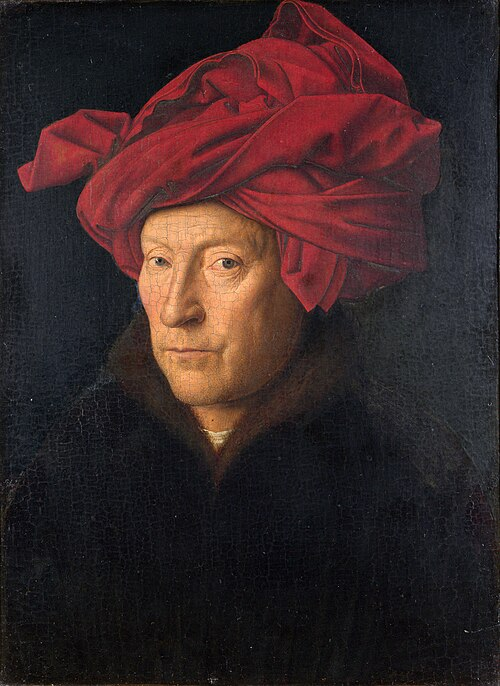
A dispatch from the art classroom: I learned from our resident art expert that 15th century Flemish artists perfected the science of painting with oil. She explained the process, which truly has changed the way I understand early oil painting. First, the surface, an oak panel, is coated with many layers of gesso. Then — and here’s the magic — it’s polished until it shines like marble, smooth and reflective. With a mortar and pestle, the artist grinds pigments into a fine powder and mixes the powder into linseed oil, where the powder hangs in suspension. After the resulting oil paint is applied — layer upon layer — to the prepared surface, light penetrates the linseed oil and bounces outward, reflecting the pigment from the marbleized base. The result is color of depth and luminosity befitting the rest of the artistry of Jan Van Eyck.
A dispatch from the botany classroom: If you, like me, have been frustrated by floppy paperwhite narcissi, keep reading: As usual, place your narcissus bulbs on top of a shallow dish of pebbles and add water. After the shoots grow a bit, replace the original water with a solution of nine parts water and one part alcohol. Not beer, not wine: it must be some sort of spirit. Of course, rubbing alcohol works too. But if you do this around cocktail hour, why should the narcissi have all the fun?
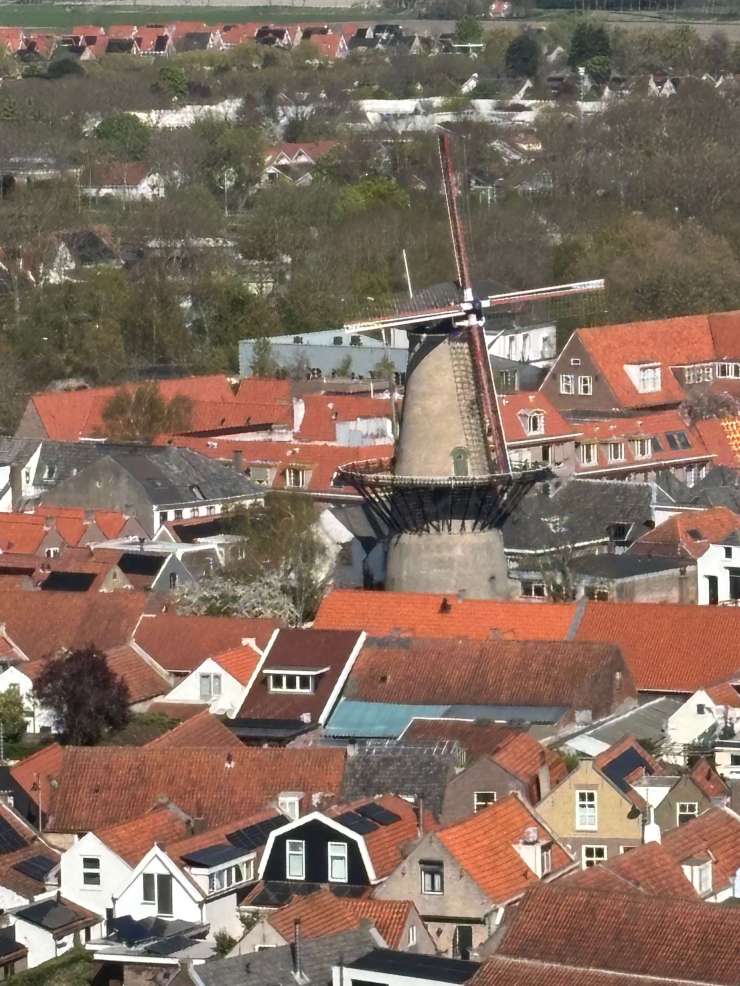
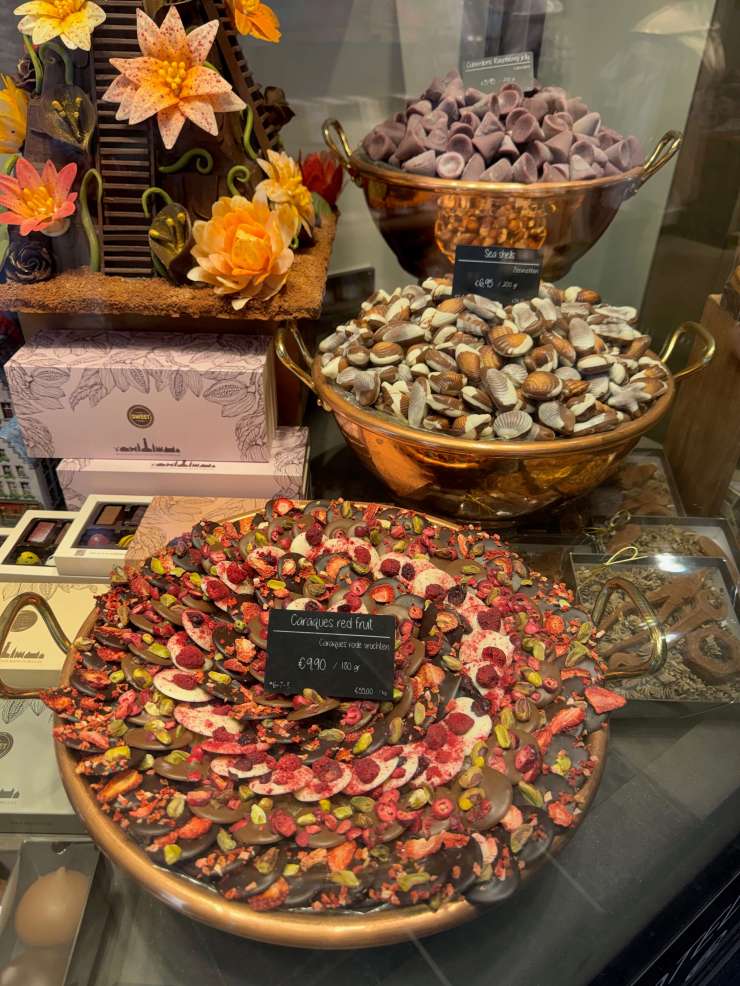
April 15: Today Kathy and I wandered amid the twisting cobbled lanes and canals of Bruges. Bruges achieved its heyday in the years of vigorous international trade, complex financial systems and the free flow of goods from all over the world — in other words, the 14th century. And it was the city’s precipitous economic decline that saved its marvelous medieval architecture; only cities on the make can afford to tear down old buildings. Bruges now delights tourists like me with its charm, its beer and its chocolate.
Bonus: On the bus ride from Bruges to Ghent, we crossed low farmland evocative of nearby Flanders Field, where 600,000 soldiers died protecting Belgium and France during World War I. Our guide, the father of two Belgian school children, said that when every Belgian child is 9 or 10 years old, they learn about World War I and World War II. They make paper poppies and visit the battlefield cemeteries of Ypres or the Battle of the Bulge. In a special ceremony, they honor the soldiers who fought and the soldiers who died, including hundreds of Americans and Canadians, who, in the words of our guide, “crossed the ocean to defend democracy for people whose language they couldn’t even understand.” Lest we forget, he added.
Bonus: If you’d like to read John MacRae’s poignant poem “In Flanders Field,” which he composed as a physician in the Canadian army after the death of his friend, click here.
April 15: At the end of our epic Bruges-Ghent day today, Kathy and I were invited to choose: visit the Ghent Cathedral over there or savor a beer over here. It will surprise no one that we chose both.
Regarding the (1,500 different) beers in Belgium, we learned that it’s customary for each beer to be served in a very specifically designed and labeled glass. This means that a pub will refuse to serve you from a perfectly full keg if they’ve run out of the corresponding goblet. Of course, the glasses become souvenirs. One Ghent tavern goes so far as to require drinkers to surrender a shoe as security, which the bartender then suspends in a basket far overhead. Return the glass, get your shoe.
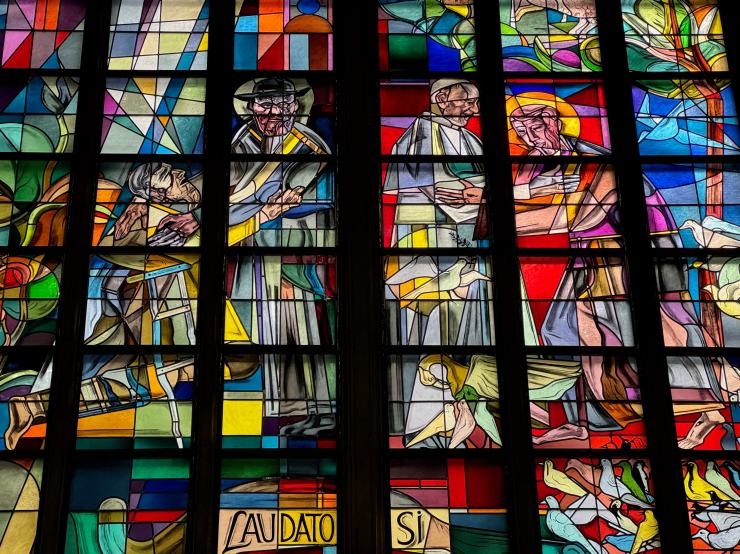
Regarding the cathedral, a beautiful brick-vaulted Gothic treasure, I did not see Van Eyck’s famed Ghent Altarpiece. But I was transfixed by a contemporary stained glass window featuring Van Eyck colors. On one side, the window depicts 19th century Belgian priest Pater Damiaan ministering to lepers on the Hawaiian island of Molokai. On the other side, we see 21st century Pope Francis embracing his namesake Saint Francis of Assisi. Below are the words “Laudato Si.” From Saint Francis’ 13th century Canticle of the Sun, the phrase “Laudato Si” also nods toward Pope Francis’ inspiring 2015 environmental and social justice encyclical. Reading that encyclical in 2017 helped me get through some bleak days at the U.S. Environmental Protection Agency. Praise.
April 16: Wordless Thursday. Well, ok. One word: tulips.

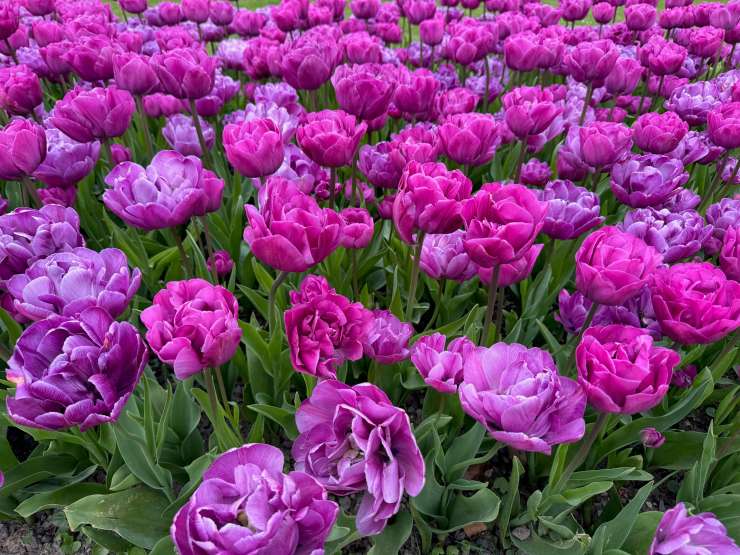
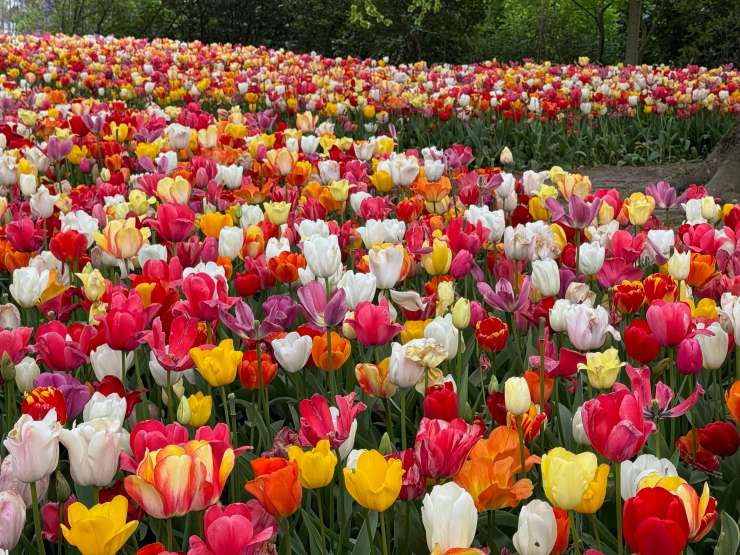
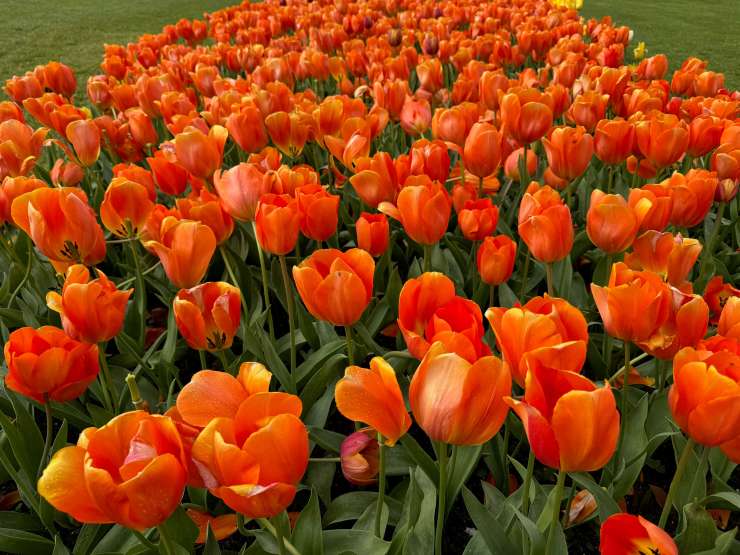
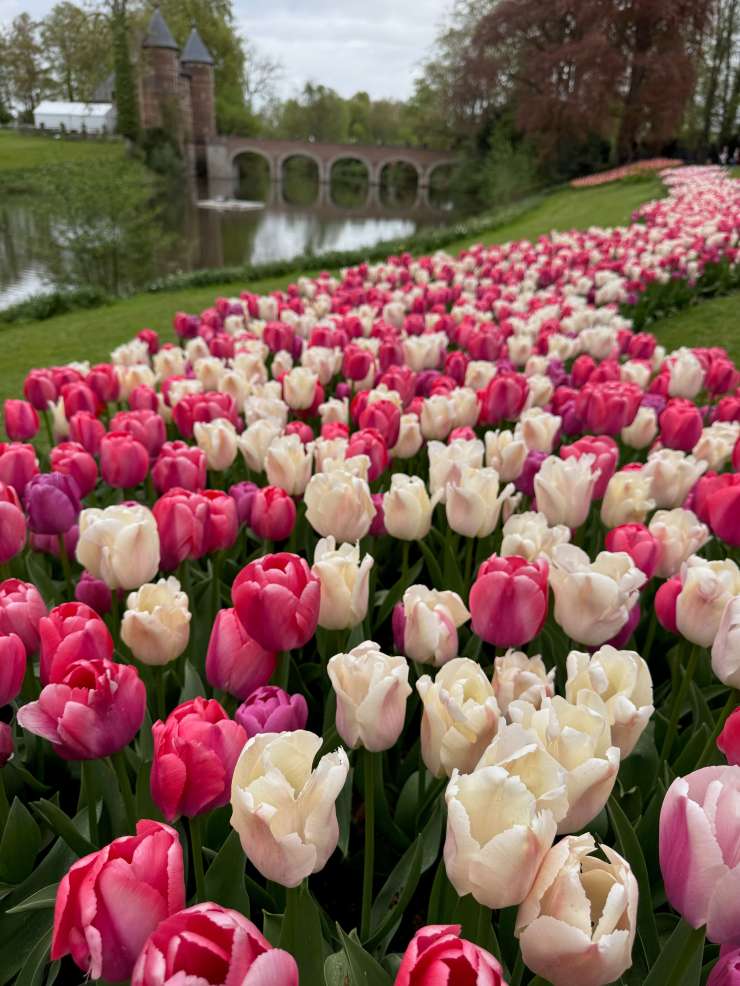
The gardens of Kasteel van Groot-Bijgaarden outside of Brussels feature 1,500,000 tulips that are planted by volunteers each fall and then dug up each spring, after the garden’s six week season. I had a very hard time selecting highlights!
Readers, to receive notifications by email each time I make a post, just scroll all the way down this page (next to the “word cloud”), look to the left and click on the black button that says “Join Me!” And if you think a friend might enjoy these, please share the Delight!
If you’d like to browse my past delights, please consult the “word cloud” featured at the very bottom of this post. Find a theme or two that interests you and sift through the sands. Or learn a bit more about my Blog by visiting my Welcome page. You’ll also see links to four essays that were published in print magazines. I’m glad you’re here!


What a wonderful trip and wonderful post! The tulips are amazing. Re those brass plaques – I have seen quite a few here in Hamburg too. Seems 1942 was the year to round people up. On a nicer note….how special to see the restoration in progress at the gallery. And your chef’s table meal…oh I would so love that!
LikeLiked by 1 person
Thank you, Barbara, for telling me about the Stumbling Stones in Hamburg and the sad synchronicity of years. They were a very meaningful part of my visit. Regarding The Night Watch, maybe I’ll get back to Amsterdam to see the restoration complete! And thanks for noticing my Chef’s Table experience; I was definitely thinking about you as I tried (and failed) to take photographs that honored the chef’s work. It would have been fun to be there with you!
LikeLiked by 1 person
Holy cats and wowsah, what a post! It covers the highs and lows of humanity, from art to Anne Frank. In between, beer, tulips, chocolate, and utterly charming views. Then there is your writing, which was so evocative. Thank you so much for sharing your pictures and observations.
LikeLiked by 1 person
Dear Laurie — Thank you not only for your enthusiastic and kind comment, but also for STAYING WITH that entire very long post. (You could tell I had plenty of bus time to take notes…) It was was a great trip! Sharing it with you makes it even more special.
LikeLiked by 1 person
It wasn’t a word or picture too long. How I enjoyed traveling with you!
LikeLike
Phew. From a writer as buoyant and engaging as you, that means a lot! ❤️
LikeLike
Wow, what a trip. Exhaustion and exhilaration must be battling for control of your body and soul. I’m pleased you included the Anne Frank quotes; she was a remarkable person. wasn’t she. And I’m glad you enjoyed Bruges; we were there over 30 years ago, and loved it…including the chocolate!
LikeLiked by 1 person
Dear Mr. P. — Exhilaration and exhaustion sums it up! Even though the time change was in my favor coming home, I’ve taken a lot of naps this week . . . Thank you for appreciating the Anne Frank quotes; I debated about that, but then decided this was important not only to honor her remarkable spirit but also to honor her desire to be a journalist, memoirist or other type of writer. We all live on in our actions and our words, as Anne demonstrates.
LikeLiked by 1 person
What an epic week! delight upon delight, I marvel at Kathy and your energy! I am still thinking of that marvelous tray of chocolate discs!
LikeLiked by 1 person
Energy, indeed. . . Chocolate (and early bedtimes) certainly helped. And speaking of chocolate, I have, to date, forborne from eating the dark chocolate I brought home for Kevin and Jeremiah. However, the one-week cooling off period ends tomorrow, so I think it’s fair game for me. One more taste of Belgium!
LikeLike
I think one-week is more than enough opportunity afforded to Kevin & Jeremiah. On On!
Admiring your Giethoorn canal capture. I do love a canal. It is always so scenic and has so much going on. This one is so picturesque. And croissant: no brainer, coins or otherwise.
LikeLiked by 1 person
Beautiful! Especially the canal and cottage! Looks so neat!
LikeLiked by 1 person
The tiny village of Giethoorn was indeed a pretty magical place. The village’s deep greens certainly complemented the bright colors of the tulips. Thanks for noticing how pretty they all are!
LikeLiked by 1 person