October 11: Last night, I sat three rows away from the 2022 Pulitzer Prize winning playwright James Ijames (pronounced “Imes”). The Phillips art museum sponsored a staged reading of Ijames’ 2015 play “White,” which tells the story of a gay white man who employs a black actress to claim his paintings as her own and submit them to a curated “New Americans” show (to which white male artists were explicitly unwelcome). Written and acted with riotous humor, the play also brilliantly pushed the audience to experience the complexity, audacity and poignancy of each character’s stand. At the end, one character’s soliloquy knocked the house into breathless, immobile silence. Commenting on that moment, Ijames told us, “Only after seeing it performed tonight did I realize that the play was really about her.”
During the discussion, Ijames also noted that “Theater is a rehearsal for citizenship.” Maybe he means undertaking the very hard work of trying to understand the views (and distress) of people with whom we disagree. If so, “White” was good practice.

Bonus: My theater companion, Jamie, described her eight-month granddaughter’s “First 100 Foods” program. Her parents have introduced the baby to solid foods coming in many flavors, colors, textures, and seasonings, even crushed red pepper. The one-hundredth meal: celebratory lobster.
October 12: With “docent” on my brain, I volunteered to help today at the 19th century barn adjacent to our town’s historic Cherry Hill Farmhouse. Mounted on the barn’s walls are countless old-time shovels, blades, drill bits, planes and saws. On a barrel rests a huge box mandolin perfect for shredding heads of cabbage at five second intervals. On a shelf are tools from the 1930s workshop of our town’s last blacksmith.
The reason I’m here, though, is found on the barn’s floorboards: two old iron corn shellers mounted on a wooden box, two old corn grinders with wide chutes, and two modern trash bins filled with ears of dried corn. As the barn doors swing open, pre-school children and their parents flow in. Working near the corn shellers, I invite the children to pluck corn kernels off the cob with their fingers; I explain how indigenous peoples used oyster shells for this purpose; and then I invite the kids to operate the corn shelling machines, which are mounted on the top edges of a large upended wooden box.
Most of the kids visit the barn every week, so they knew what to do: put the pointy end of the ear of corn into the mouth of the sheller, push hard on the crank, watch as the sheller’s teeth twist the ear of corn into the body of the machine, listen as the kernels spray into the box, and retrieve the denuded corn cob when it’s spit from the sheller onto the barn floor. The children then lean into the box to gather their kernels and, at the corn grinder, they convert their harvest into coarsely ground squirrel food.
The day was sunny, and so were the faces of everyone there: the children, their families, and — throughout two exhausting hours — me.

Bonus: For 19th century barn enthusiasts, check out this five-minute video about Cherry Hill Barn. You’ll get a refresher course on “simple machines,” and, at the 4 minute mark, you’ll also see the corn shellers and grinders in action.
Double Bonus: One dad, watching as his son shelled corn, told me that he grew up in Kansas with a box sheller just like this. He said his grandfather would place it in the center of a neighbor’s cornfield; after the neighbor’s tractor rolled through the field harvesting corn, he and his brother were allowed to go into the field to retrieve, shell and grind any corn left behind. Mixed with hay and alfalfa, the ground corn became silage for the cows grazing out back. That’s really living history.
October 12: Who have you been an angel for? I hope someday you find out, as I did today.
Over several years, I had led a small church discussion group and soon we were animated as much by fellowship as by faith. In that spirit, one member, Tom, shared his apprehension concerning an upcoming 50-mile Boy Scout hike. Each year for decades he would train and lead a small group of teens over the bike paths, hills and trails of Arlington, Virginia. The last four miles are the worst, he had confessed: It’s dark, it’s cold, he’s tired and he always ends up trudging those four one-mile loops alone.
Tom reminded me today that I had joined him for the last leg of his hike. He recalled that we walked the penultimate loop in complete silence, at his request, and the final loop in lively chatter.
He reminded me that he requested two completion badges: one for him and one for me. He had walked fifty miles; I had walked only two.
I remember that evening as a cold but congenial walk with a weary friend. He, however, remembered something very different. Our two loops together were indeed pleasant, he told me today, but the miracle was seeing me walking toward him in the darkness just before he undertook those last four miles. “At that moment, you were like an angel to me.”
So I ask, who were you an angel for? It might have been for something as simple as just showing up.

October 13: Jeremiah has wisely chosen autumn in Virginia to explore the world of apples. Almost every day, he brings home a new variety and describes them with the poetry of a sommelier. I’m munching on a Honey Crisp as I write this, in homage to our wild excitement when we discovered this “exotic” long ago. Now I admire our fruit basket piled high with Pink Lady, Sugar Bee, SweeTango and, Jeremiah’s runaway favorite, the Kanzi. We chuckled yesterday reading Apple Rankings, which flattered the Kanzi as “The European Party Apple” and cautioned parents to “[k]eep this apple away from your children” because of the sweet and tangy “psychedelic ecstasy” a bite induces. [!!!]
Oh my goodness, even the grocery sack containing these apples is waving pompoms: “Kanzi are more than just apples — they’re your life’s cheerleader! . . . [T]his apple answers the question, ‘Can you handle life’s challenges?’ with a vibrant, ‘Yes, You Kanzi!’”
Bonus: Readers, help me: what is your favorite baking apple? Should I break from my Granny Smith tradition this Thanksgiving? Or give the Rome apple a try? What do you do?
October 15: With the help of my sister-in-law Susan, I’ve discovered Bitmojis. I sort of went crazy tonight bombarding family members with cartoon gags. This one seemed apt to share with you!

October 16: Chores done, I grabbed my book for an hour of sunshine and seagulls on the bayside deck of the Assateague National Seashore visitors center. I’d read a few pages when a couple positioned themselves to take a selfie with the bay and island behind them. I offered to take their picture and we got to talking. They’re from Wisconsin, own an RV, are first-time visitors to Assateague, and use motorized scooters to see the sights. (“I was dubious when my wife surprised me with them at Christmas, but we love them!”)
I urged them to zip along the island to enjoy the walking trails (and horses). They, in turn, urged me to visit Wisconsin. (Have Tesla, will travel!) We introduced ourselves as they left. Another man turned to me, “You won’t get any reading done sitting there!” Maybe so. And maybe that’s all right.

October 17: Last year, I told you about seeing watermelons traveling down the highway in a hollowed-out school bus. Yesterday I saw a wire-framed, roofless semi piled high with — mown grass? No: green beans. As I drove past, I saw literally millions of green beans massed on the semi. I wouldn’t have believed my eyes if a dozen or so weren’t poking their bodies half-way through the wire mesh and wiggling at me.
Readers, to receive notifications by email each time I make a post, just scroll all the way down this page (next to the “word cloud”), look to the left and click on the black button that says “Join Me!” And if you think a friend might enjoy these, please share the Delight!
If you’d like to browse my past delights, please consult the “word cloud” featured at the very bottom of this post. Find a theme or two that interests you and sift through the sands. Or learn a bit more about my Blog by visiting my Welcome page. You’ll also see links to four essays that were published in print magazines. I’m glad you’re here!


That green-bean truck sounds a little scary. 😉
David Driskell had a strong Maine connection and even owned a house in Southern Maine. I think he went to the Skowhegan School of Art
That bitmojis is so cute and very appropriate. For my pies, I always use cortlands, an old fashioned apple.
LikeLiked by 1 person
Thanks for the apple suggestion, Laurie, and for the David Driskell information. I feel like I have a connection to Maine too, now! Thanks also for noticing the green bean bit. It was astonishing, especially because no green beans fell onto highway!
LikeLiked by 1 person
You certainly do have a Maine connection!
LikeLike
Cherry Hill Farmhouse sounds a really interesting place to visit. The green beans – my imagination is seeing something I can’t quite believe is what you saw….
Apples – I never make apple pie, but I do make apple crumble and use whatever I have to hand, though purists say one should use Granny Smiths, an apple I don’t like.
LikeLiked by 1 person
I understand your incredulity (and wild imaginings) re: the green bean truck. Here is a link to other people’s photos. The one I saw resembles the one on the top left. Green Bean Truck
LikeLike
Your theatre night sounds interesting, perhaps challenging even? Live theatre at its best has an impact that movies and television can’t match; to be part of a theatre audience that is totally captivated by the actor(s) on stage is a magical shared experience, don’t you think?
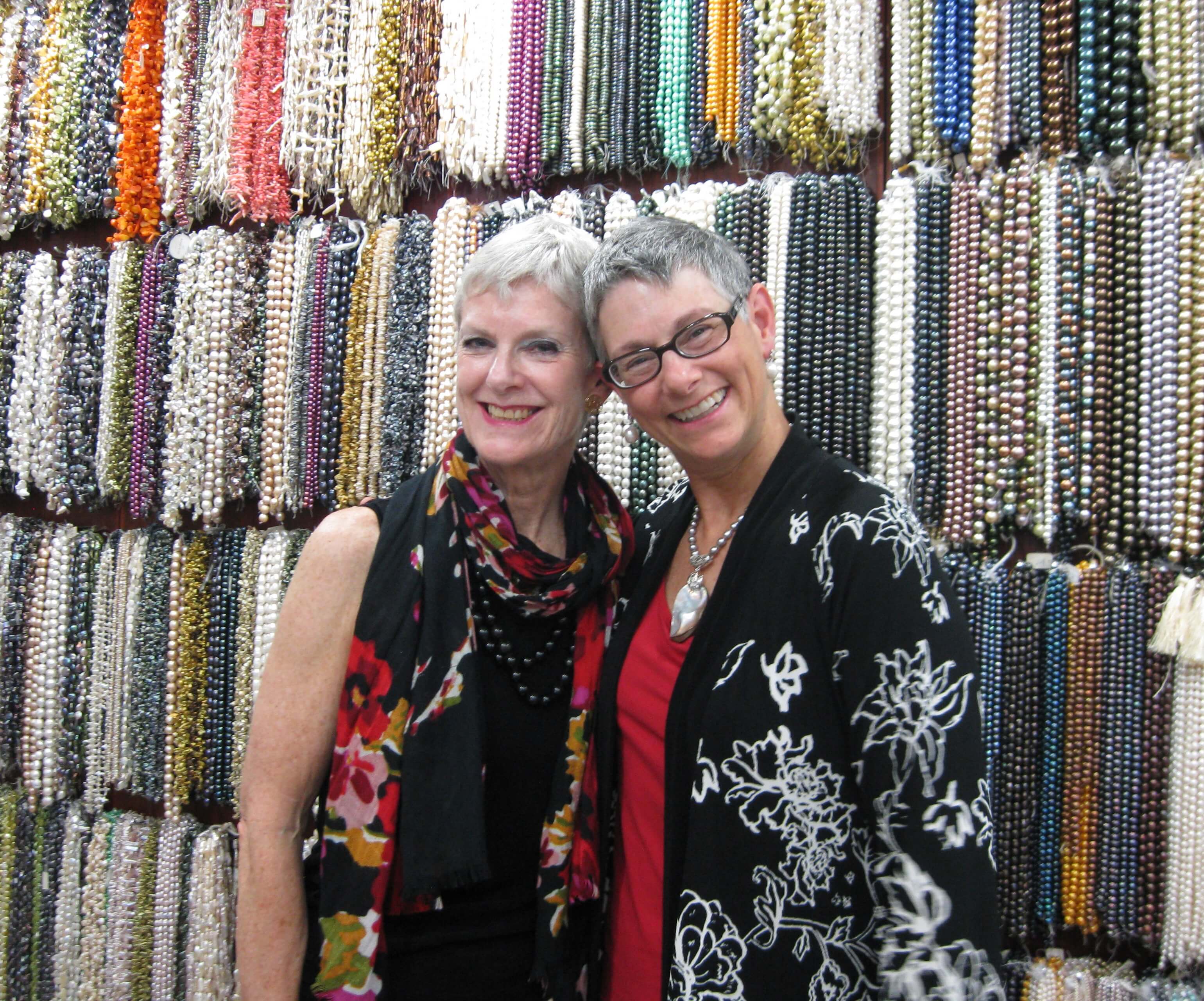
Lovely photo of you and Jamie!
LikeLiked by 1 person
I agree with you about the magic of theatre and the importance of seeing live actors with an audience sharing the same (or different!) experiences. And we were told that the actors had rehearsed only for a few hours before delivering their readings. They were all so convincing that we needed no sets or costumes or movement to believe it all!
Thanks also for liking the photo of Jamie and me. Because we both “silvered” prematurely, we look the same now as we did then!
LikeLiked by 1 person
Hi, Carol Ann – Once again, there are so many great gems in this post.
To answer your final questions, I believe Granny Smith, Gala, Fuji, Honey Gold, Braeburn, Cortland, Jonathan, Haralson, and Newtown Pippin are all good baking apples as they hold their shape well. Narrowing it down, I would go with the freshest apple in season, or mix things up and use a few different apples! Let us know what you decide and how it turns out.
For our Canadian Thanksgiving (which was this past Monday), I made my requested Apple-Cranberry Relish. I used Gala apples this year, and they worked out brilliantly!
LikeLiked by 1 person
This is a very encouraging and helpful apple reply, Donna. Thank you. And the Apple-Cranberry Relish sounds delicious. I started making my own cranberry relish only a few years ago. I had mistakenly believed it was difficult. Now I see how simple it is, and it’s a holiday favorite. (I just checked my recipe: I put apple in mine too!)
And Happy Belated Thanksgiving!
LikeLiked by 1 person