March 27: Our municipal public works folks took advantage of surprisingly warm temperatures to flush our neighborhood fire hydrant. Water gushed into the street and formed a wide fast-moving stream along one curb. Elementary school children waiting for their bus gathered on its banks, then in the shallows, and at last in the main channel.
Teachers may be mystified by so many wet sneakers this morning, but we won’t be.
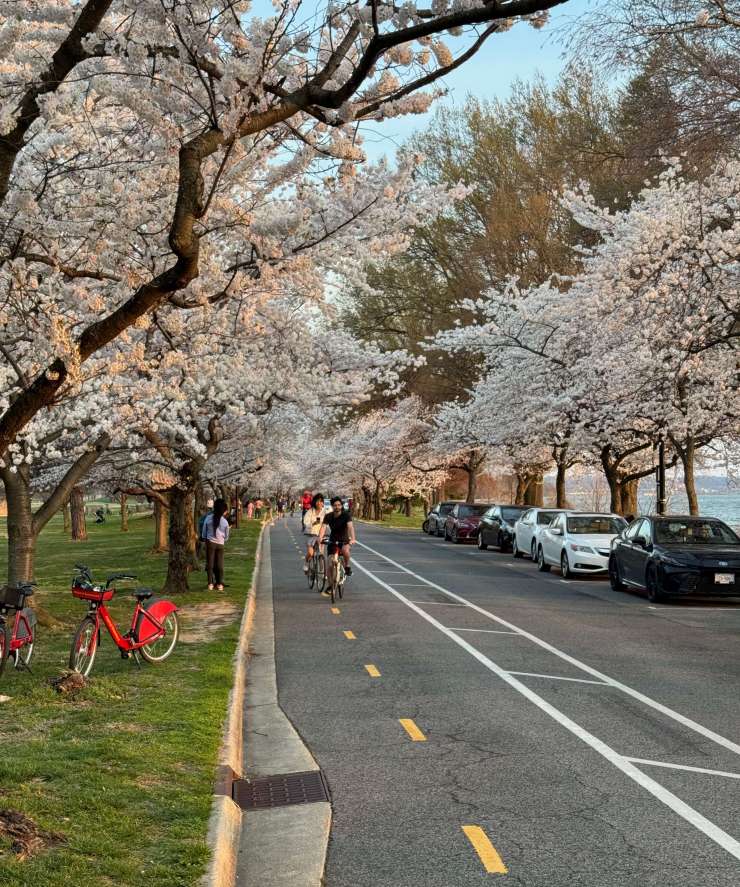
March 28: The main street in our town was lined for more than a mile with people waving flags and holding signs. Winter coats sported homemade buttons and faces sported smiles. Passing cars honked their support. We had gathered to celebrate goodwill, integrity and democracy — and to embody our conviction that America’s fundamental decency and promise is unabated. In fact, as I shared hugs and conversation with a dozen old friends, I witnessed the power of community and service.
One sign read, “Everyone is our Neighbor.” May all our choices affirm that.
Bonus: I read an article posing this question, and so I ask you: What do you believe? What do you teach?
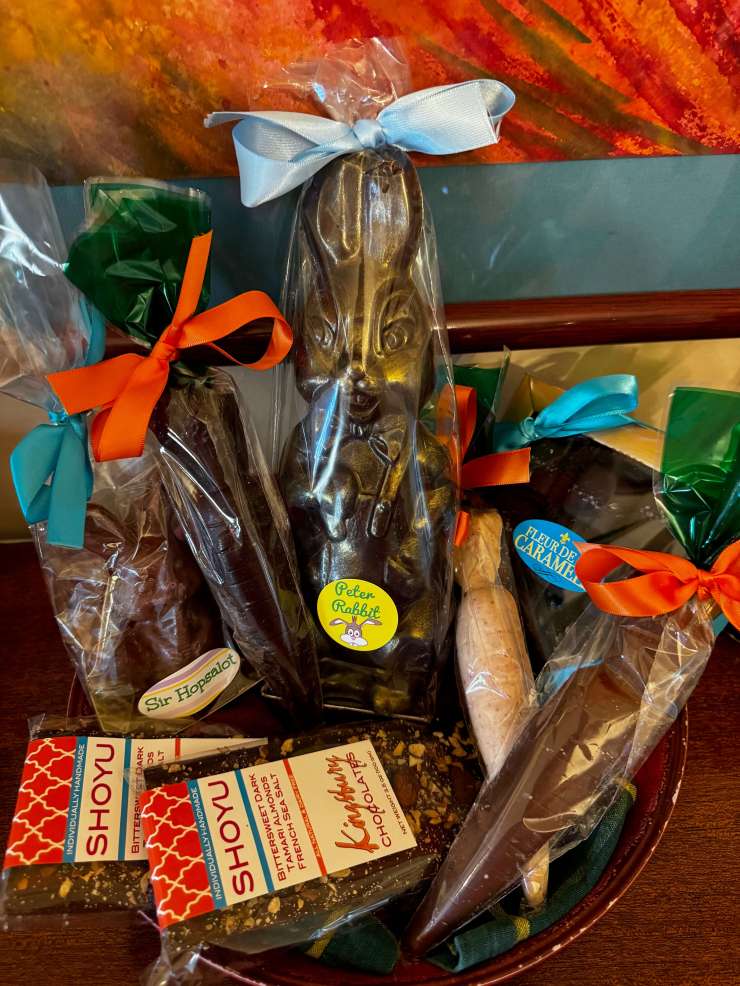
March 29: An easy 20-minute walk from my house is the Eden Center, a festival of Vietnamese restaurants and bakeries, salons and shops. Founded decades ago by people who had fled Vietnam after the fall of Saigon, the Eden Center has attracted visitors from up and down the East Coast. Despite its fame, its proximity and my love for Vietnamese food, I’d been only once.
Last week, though, I and three friends gathered to celebrate a birthday. Two of my friends, both childhood immigrants from Vietnam, selected the restaurant and ordered the food: two soups, a crepe (resembling an omelet) and lots of catfish, all prepared differently. I dove into our feast — lingering well past the calls of hunger but firmly within the demands of pleasure. We had so much fun that we resolved to celebrate all our birthdays this way. I’m thrilled that our next communal birthday is just a month and a half away.
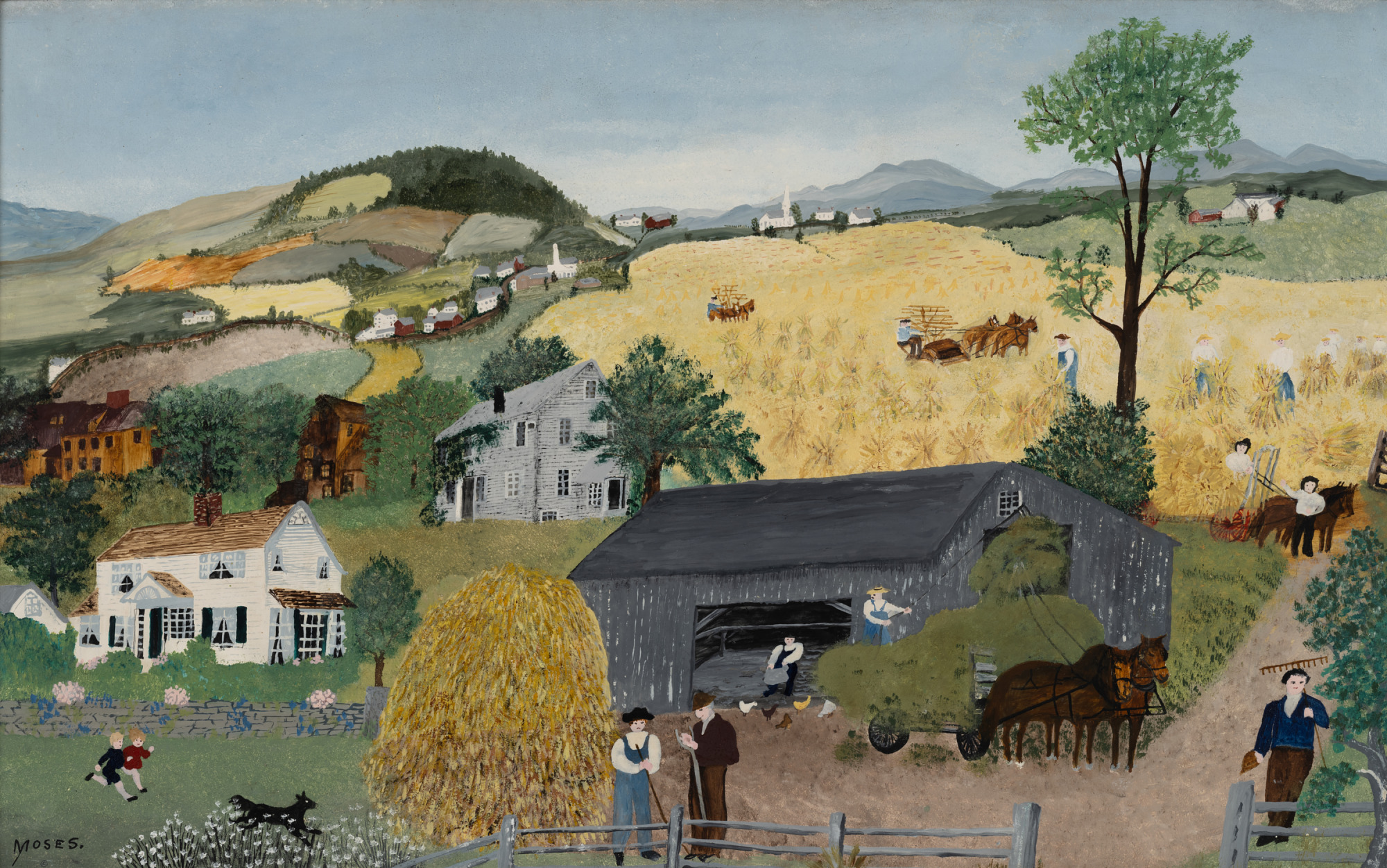
March 30: I was thrilled yesterday to receive a text from my friend Kathy wondering whether I’m be at the Smithsonian American Art Museum today. Kathy and several buddies would be visiting the museum to see the Grandma Moses exhibition; would I like to give them a tour? Definitely, yes. I love engaging smart, eager people about art, and I knew Kathy’s group would give me a lot to think about.
But the best part was Kathy’s request. Kathy had asked me — tentatively, gratefully, humbly — to do something that I love to do, to do something that I think I’m good at. By her invitation, I felt truly seen and valued.
I suspect that you, dear readers, are pretty good at expressing gratitude for — and to — people in your lives. How often, though, do I invite people to exhibit their special gifts, the ones that fill them (and others) with joy, the ones that infuse them with a sense of purpose, the ones that maybe even send a tiny morsel of love into a world abounding in love and yet always needing more?
Maybe my first step is to pay attention to the special gifts exhibited by people in my life. I’ll look for the joy, or the purpose, or the love. And then I’ll ask them to share a morsel of that gift with me. Exactly as Kathy did.
Bonus: No action is too small when done out of love, because as Mother Teresa said, our love makes it infinite.
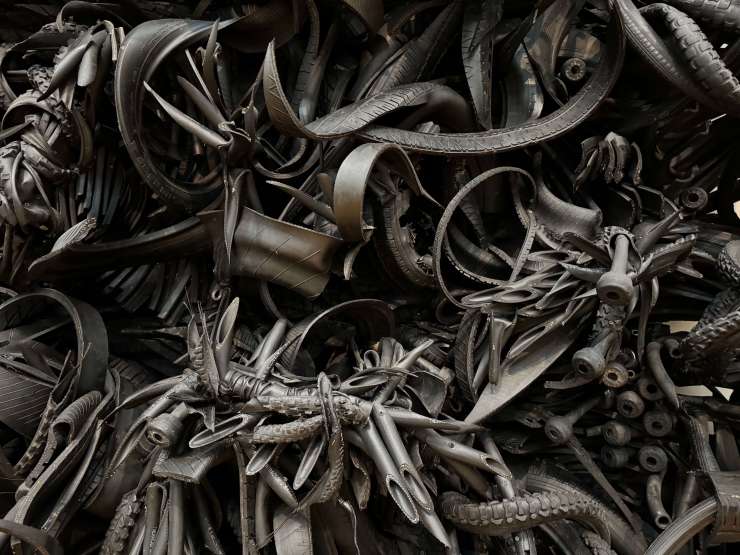
March 31: “Frenetic energy. Going everywhere. Resisting calm. Anchored — but also kind of loopy.” Nope, that’s not a description of me. Rather, these phrases describe a sculpture by contemporary artist Chakaia Booker, which the National Gallery of Art featured in a recent Finding Awe workshop.
The first time I saw Booker’s work — at the National Museum of Women in the Arts with my friend Allison — I found myself captivated (and mystified by my reaction). After all, that monumental piece was made entirely of black rubber tires, which Booker slashed, twisted, contorted and even filleted to create a three-dimensional piece that practically leaps from the wall. I’d never seen anything like it and couldn’t forget it.
So imagine my delight in being able to invest 90 minutes in intense community exploration of an even larger piece temporarily at the National Gallery of Art. I loved how my meaning-making mind insisted on finding, amid all that rubber, a delicate water course, clutches of marsh grass, dangling tree roots, and even beds of flowers. Even though I agreed with the high-energy descriptors and offered a few myself, the funny thing was this: the longer I gazed, the calmer I felt.
I guess my job is not to understand art’s effect on me, but instead simply to let it in and see what happens.
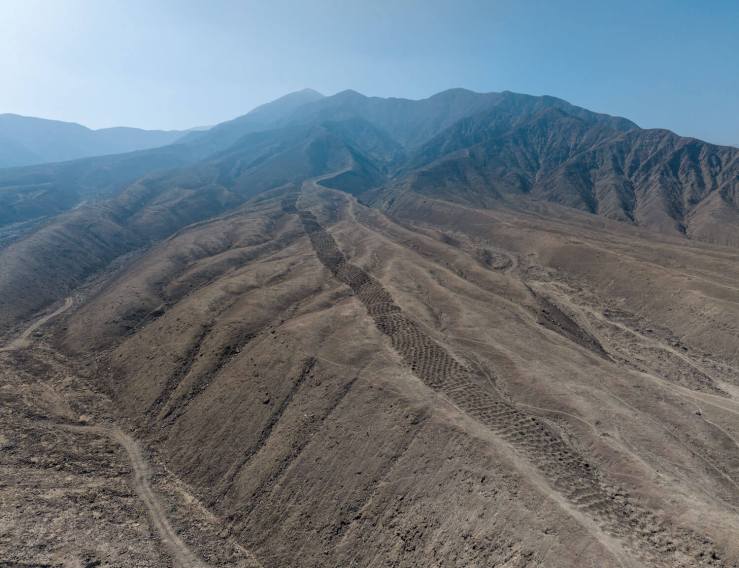
April 1: Probably chasing a dream from when I was ten years old, I subscribe to Archeology magazine. One article amazed me, telling about a nearly mile-long swath of thousands of shallow depressions — called the Band of Holes — that snakes high in Peru’s coastal desert above a fertile valley. The band averages around 60 feet wide, and the holes range in size from three to six feet across and 1½ to 3 feet deep.
The archeological mystery is the band’s age and its purpose. Based on a large sample of potsherds, archeologists believe that the band could be 1,000 years old. They believe it was constructed by the powerful mercantile-based Chincha Kingdom for use as a mile-long public marketplace, with groups of people bartering, say, twenty holes of maize for ten holes of cotton.
When the Inca succeeded the Chincha around 1400 C.E., however, the holes became infrastructure for the collection of tribute. Archeologists also believe the very discernible patterns of holes and cut-through paths established an accounting system, akin to the Inca string-and-knot system known as quipu.
My mind lingers on the marketplace, though. I imagine growers and makers meeting weekly for the world’s longest farmer’s market. Cucumbers, anyone?
April 2: Ok, shall I mention the newly released 2026 Mahjong card? (I now care passionately about these things.) With my friends, who recently welcomed me into their “Wizards of Mahjong” group, I tackled the new card again today, with mixed results. Actually, no: my results were uniformly favorable — I had a great time. I just didn’t win!
Readers, to receive notifications by email each time I make a post, just scroll all the way down this page (next to the “word cloud”), look to the left and click on the black button that says “Join Me!” And if you think a friend might enjoy these, please share the Delight!
If you’d like to browse my past delights, please consult the “word cloud” featured at the very bottom of this post. Find a theme or two that interests you and sift through the sands. Or learn a bit more about my Blog by visiting my Welcome page. You’ll also see links to four essays that were published in print magazines. I’m glad you’re here!
 Fashioned For Joy